
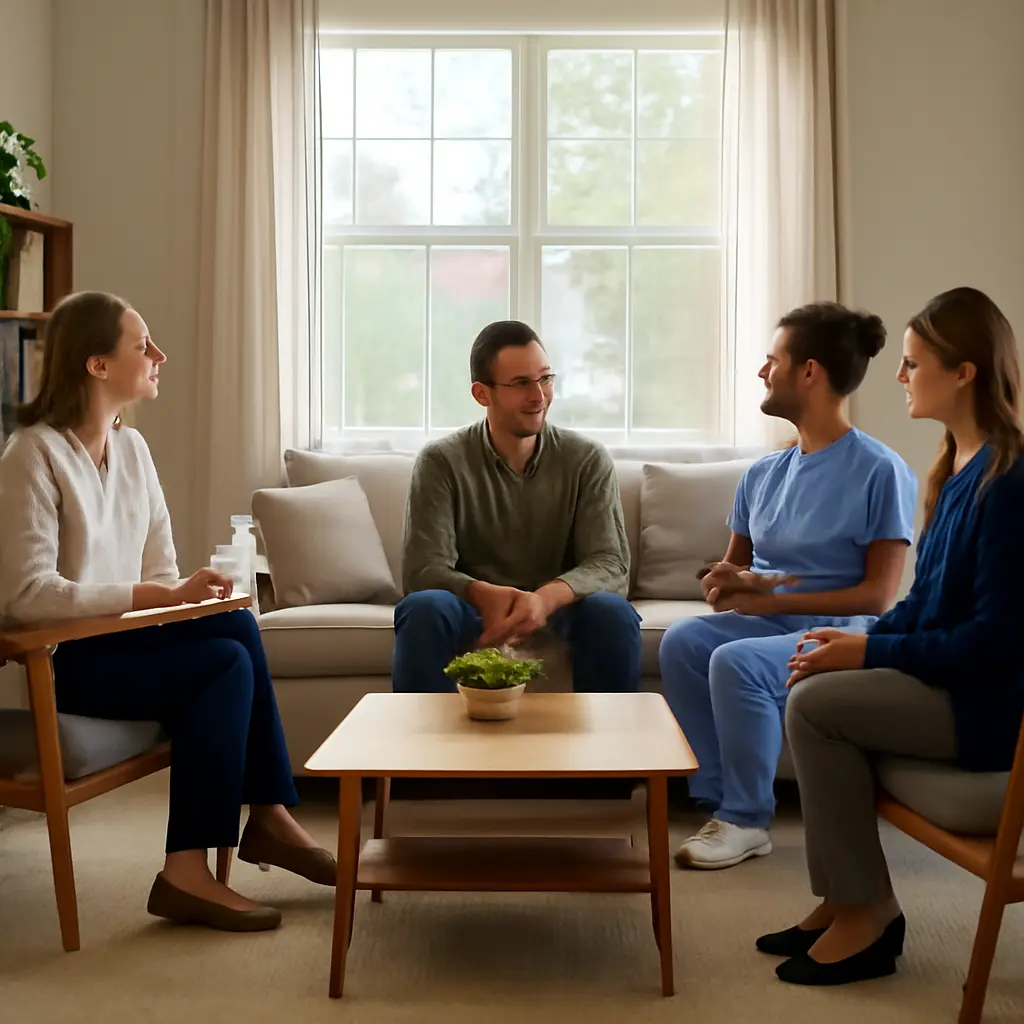
A therapist, a nurse, and a social worker walking into your living room is more than a memorable image: it describes a coordinated form of in-home care that brings mental-health support, clinical nursing, and practical social services to a person where they live. Often delivered through home-based crisis intervention, community mental-health teams, or integrated care programs, this approach can help people receive support without relying solely on emergency departments or inpatient settings. Its importance is underscored by the scale of need: the U.S. Substance Abuse and Mental Health Services Administration estimated that 23.1% of adults experienced any mental illness in 2022, while the Centers for Disease Control and Prevention reported that about one in five U.S. adults live with chronic pain. This article explains what a multidisciplinary home visit is, how its professionals’ roles fit together, what evidence and safeguards matter, and what individuals and families can expect.
Multidisciplinary home visits: definition and purpose
A multidisciplinary home visit is a planned service in which professionals from different disciplines assess needs and coordinate care in a person’s residence. The World Health Organization describes integrated, people-centred health services as care organized around people’s needs and delivered through coordinated services across settings. Applied at home, that principle can connect emotional support, physical-health assessment, and help with housing, benefits, caregiving, or other daily-life needs.
There is no single standard team or universal program called “a therapist, a nurse, and a social worker.” Depending on the referral and local service, the team may include a psychologist, licensed clinical social worker, psychiatric nurse, community health worker, occupational therapist, or peer-support specialist. Some programs send several professionals together; others coordinate separate visits. The shared feature is a care plan that links disciplines rather than treating each concern in isolation.
Home-based mental-health and crisis support
Home-based mental-health care brings assessment and therapeutic support to someone who may have difficulty reaching a clinic, or whose needs are better understood in their home and community. Services range from scheduled counseling and follow-up after hospitalization to intensive in-home programs for children and families. A home visit is not automatically an emergency response: urgent danger, severe medical symptoms, or immediate risk of harm may require emergency services or a higher level of care.
The National Institute of Mental Health reported that suicide was the 11th leading cause of death in the United States in 2022, emphasizing why clear crisis pathways matter. Home-based teams should explain how they assess immediate risk, who to contact after hours, and when they will involve emergency responders. In the United States, people in suicidal or mental-health crisis can call or text 988 for the Suicide & Crisis Lifeline; call 911 for an immediate life-threatening emergency.
Integrated physical and behavioral health
Integrated care addresses mental and physical health together. A nurse may notice medication side effects or worsening symptoms, while a therapist explores distress, coping, or motivation and a social worker identifies barriers such as food insecurity or lack of transportation. The team can then coordinate referrals and follow-up, with the person’s consent, instead of leaving the individual to navigate disconnected systems alone.
The Agency for Healthcare Research and Quality’s framework for care coordination emphasizes organizing activities among multiple participants, including the person receiving care, to support appropriate service delivery. That makes communication and a shared plan central features—not simply having several professionals present in the same room.
Professional roles in a home-based care team
The team works best when each professional contributes distinct expertise while agreeing on the person’s priorities. The exact scope of practice depends on licensure, jurisdiction, program design, and the individual’s needs. The following roles are common examples, not a promise that every visit includes all three.
Therapist: emotional assessment and treatment
A therapist assesses emotional and behavioral concerns and provides evidence-informed treatment within their training and license. In a home visit, that may involve discussing symptoms and goals, practicing coping strategies, supporting a family conversation, or helping develop a safety plan. Therapists may be psychologists, counselors, marriage and family therapists, or clinical social workers; the title and permitted activities vary by location.
A therapist’s role is not to impose a diagnosis or force disclosure. Good practice includes explaining confidentiality and its legal limits, asking what the person wants help with, and adapting care to culture, communication needs, and privacy at home. A therapist may also coordinate with the nurse or social worker, but information-sharing should follow applicable privacy rules and the person’s consent unless a legal exception applies.
Nurse: clinical assessment and health coordination
A nurse contributes clinical assessment and health education. Depending on credentials and the care plan, nursing work may include reviewing symptoms and medications, checking vital signs, identifying changes that need medical follow-up, and helping the person understand treatment instructions. Nurses can also flag interactions between physical symptoms, medication effects, mental health, and the home environment.
The U.S. Bureau of Labor Statistics describes registered nurses as assessing patients, administering treatments, coordinating care, and educating patients and families. A home visit does not replace a physician or emergency evaluation when one is needed. The nurse should clarify what can be handled during the visit, which concerns need the person’s primary-care clinician, and what symptoms require urgent attention.
Social worker: practical support and systems navigation
A social worker assesses social and environmental factors that affect wellbeing and helps connect people to resources. Depending on the setting and qualifications, this may include support with benefits, housing, food access, caregiving, transportation, family services, or referrals to community organizations. Social workers can also help a person understand service options and communicate their preferences across agencies.
The Bureau of Labor Statistics notes that social workers help people cope with and solve problems in their everyday lives, with specializations including health care and mental health. Their contribution matters because a treatment plan can be difficult to follow when basic needs remain unmet. A useful team therefore treats social conditions as relevant to care, not as side issues.
How a coordinated home visit works
A home visit typically moves from preparation to assessment, shared planning, and follow-up. Programs differ, but a transparent process makes the visit more predictable and gives the person a meaningful role in decisions.
Before the visit: purpose, consent, and preparation
Before the team arrives, the service should explain who will attend, why the visit was arranged, how long it may take, and whether any records or medication lists would be useful. The person should be able to ask about costs, confidentiality, interpreter access, and whether a support person may join. Where participation is voluntary, the team should explain that clearly and respect the person’s decision.
Preparation also helps prevent avoidable surprises. For example, a family may prefer that sensitive conversations happen in a private room, or a person may need an interpreter or an accommodation for a disability. Teams should ask rather than assume what will make the visit accessible and comfortable.
During the visit: assessment and shared decisions
During the visit, professionals may ask about the person’s goals, symptoms, health conditions, medications, daily routines, relationships, and immediate safety. They should explain why they are asking, avoid unnecessary intrusion, and make room for the person’s account of what is working. If the person agrees, family members or caregivers can contribute observations while the team preserves the individual’s voice and privacy.
A practical outcome is a concise plan that identifies priorities, responsibilities, and next steps. For example, the therapist might schedule follow-up sessions, the nurse might contact a prescriber about a medication concern, and the social worker might help arrange transportation to an appointment. Each action should have a named person responsible and a timeframe.
After the visit: follow-up and continuity
Follow-up turns a one-time conversation into coordinated care. The team should say how and when it will check back, what to do if a condition worsens, and which organization to contact for routine questions. With appropriate consent, the team can share relevant information with the person’s primary-care provider or other clinicians to reduce conflicting instructions.
Programs can track practical measures such as whether referrals were completed, whether the person could access prescribed care, and whether the agreed goals changed. These indicators describe service performance; they should not be presented as proof that every home-based model produces the same outcomes.
Benefits, limitations, and safeguards
Bringing care home can reduce travel barriers, reveal environmental or caregiving needs that are hard to see in a clinic, and make coordination more personal. It can also raise concerns about privacy, safety, cost, and boundaries. The benefits depend on the quality of the service, the person’s preferences, and whether the team can provide appropriate follow-through.
Potential benefits: access and a fuller picture of need
A home visit may be useful for people with mobility limitations, caregiving responsibilities, transportation barriers, or difficulty engaging with clinic-based services. Seeing the home context can help professionals understand medication storage, fall risks, social supports, and daily routines—details that may influence a care plan. A coordinated team can also reduce the burden of repeating the same story to multiple providers.
These are plausible service advantages, not guaranteed results. Outcomes depend on staffing, access to follow-up services, clinical appropriateness, and whether the person wants care delivered at home. Programs should evaluate results with transparent measures and avoid implying that a home visit can replace all outpatient, hospital, or emergency care.
Risks and safeguards: privacy, choice, and safety
A home is personal, so an unannounced or poorly explained visit can feel intrusive. People should know who is coming, what information may be recorded, who may receive it, and how to raise a concern. The U.S. Department of Health and Human Services explains that the HIPAA Privacy Rule protects health information held by covered entities and business associates, subject to specified uses, disclosures, and exceptions. Privacy rules do not mean that every conversation is automatically confidential in every circumstance; teams should explain the limits that apply.
Safety planning should protect both the person receiving care and staff without making assumptions about someone based on diagnosis or background. Teams can discuss visit arrangements, accessibility, pets, preferred names, and who may be present. If a visit feels unsafe or unwanted, the person can ask the team to pause, clarify the purpose, or reschedule, except where a specific legal or emergency process governs the interaction.
Real-world application: a coordinated response to overlapping needs
Consider a hypothetical older adult who has become withdrawn after a hospital stay, is uncertain about new medications, and has missed follow-up appointments because transportation is unreliable. A therapist could explore grief, anxiety, or adjustment and agree on a realistic counseling goal. A nurse could review the medication list, assess reported symptoms, and contact the appropriate prescriber about concerns. A social worker could identify transportation options and check eligibility for relevant community supports.
The value lies in connecting those actions: the nurse’s findings may inform the therapist’s understanding of symptoms, while transportation support may make clinical follow-up possible. This example illustrates the logic of multidisciplinary care; it is not a reported clinical case or a guarantee of improvement. A responsible program would document the person’s consent, clarify each professional’s role, and agree on a follow-up plan together.
Conclusion: coordinated care begins with the person
A therapist, nurse, and social worker in the living room represent a practical way to connect emotional treatment, clinical assessment, and help with everyday barriers. A well-run multidisciplinary home visit has a clear purpose, respects consent and privacy, distinguishes each professional’s role, and ends with agreed responsibilities and follow-up. Home-based care can make support more accessible and context-aware, but it is not a substitute for emergency response or every form of clinical care.
If you are considering this kind of service, ask the provider who will attend, what each person can do, how information is handled, whether there is a cost, and what happens after the visit. For further guidance, consult your health-care provider, local community mental-health service, or relevant public health agency, and seek urgent help when there is immediate danger.
Sources: Substance Abuse and Mental Health Services Administration, Key Substance Use and Mental Health Indicators in the United States: Results from the 2022 National Survey on Drug Use and Health, https://www.samhsa.gov/data/report/2022-nsduh-annual-national-report; Centers for Disease Control and Prevention, Chronic Pain Among Adults — United States, 2019–2021, https://www.cdc.gov/nchs/products/databriefs/db473.htm; World Health Organization, Integrated People-Centred Care, https://www.who.int/health-topics/integrated-people-centered-care; National Institute of Mental Health, Suicide, https://www.nimh.nih.gov/health/statistics/suicide; 988 Suicide & Crisis Lifeline, Get Help, https://988lifeline.org/; Agency for Healthcare Research and Quality, Care Coordination, https://www.ahrq.gov/ncepcr/care/coordination.html; U.S. Bureau of Labor Statistics, Occupational Outlook Handbook: Registered Nurses, https://www.bls.gov/ooh/healthcare/registered-nurses.htm; U.S. Bureau of Labor Statistics, Occupational Outlook Handbook: Social Workers, https://www.bls.gov/ooh/community-and-social-service/social-workers.htm; U.S. Department of Health and Human Services, HIPAA for Professionals: Privacy Rule, https://www.hhs.gov/hipaa/for-professionals/privacy/