
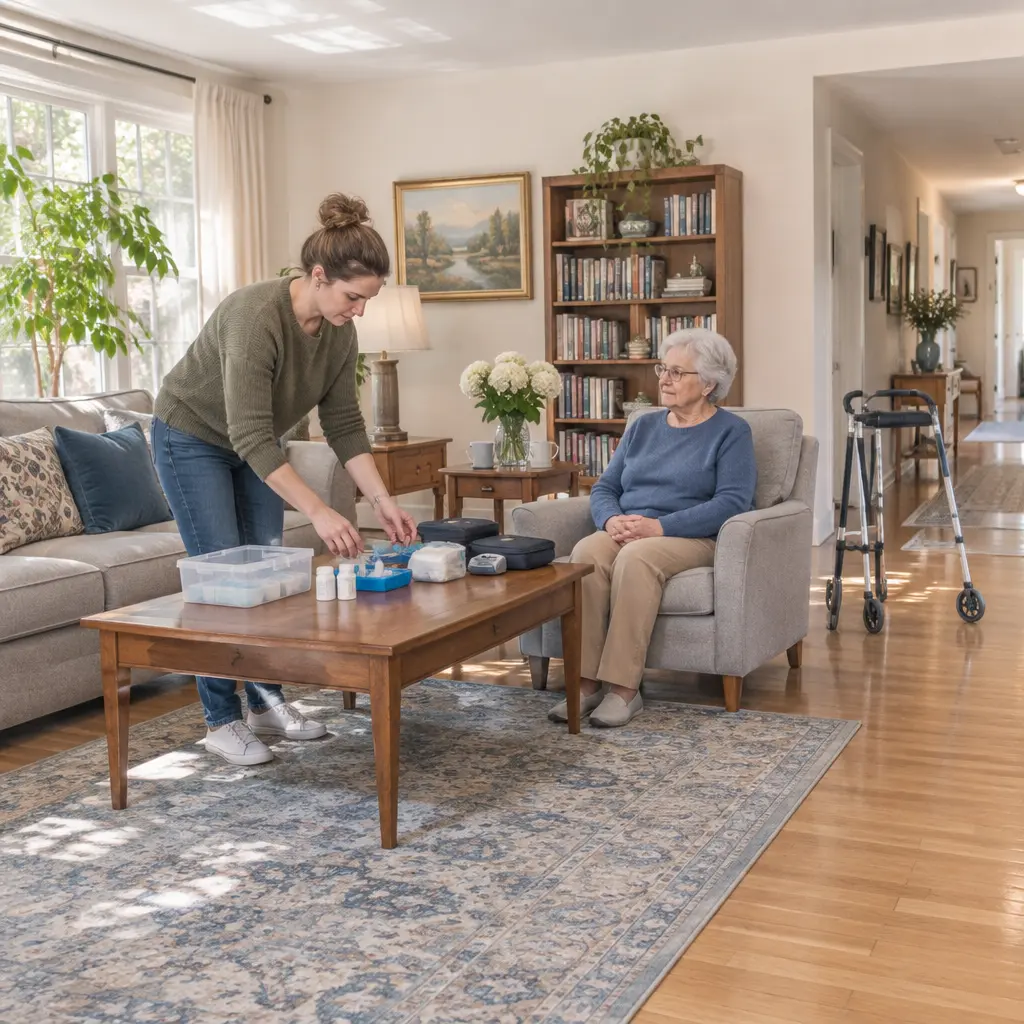
Making a home safe for medical care means arranging the space, equipment, and daily routines to reduce preventable injury and support the care a person needs. The Centers for Disease Control and Prevention (CDC) reports that falls are a leading cause of injury among adults 65 and older, and more than one in four older adults falls each year. A safer home can help address that risk while also supporting medication management, infection prevention, emergency access, and care by family members or professionals. Start with the person’s needs and a room-by-room assessment, then address pathways, bathrooms, equipment, medicines, and emergency plans with guidance from the care team.
Home safety measures support medical care
Home safety measures are practical changes to a home and its routines intended to reduce hazards and make essential care more manageable. The National Institute on Aging (NIA) advises people to look for fall hazards such as loose rugs, clutter, poor lighting, and absent grab bars. For someone receiving medical care at home, the assessment should also consider mobility, cognition, vision, equipment, infection risks, and how caregivers will reach and use supplies.
There is no single checklist that fits every household. A person who uses a walker, for example, may need wider clear routes and a place to turn, while someone using oxygen needs equipment positioned according to supplier instructions and away from ignition sources. Ask the clinician, home-health professional, occupational therapist, or equipment supplier to help tailor changes rather than relying on a generic list.
Assess needs before changing the home
A home assessment identifies the person’s daily activities, likely hazards, and equipment requirements. Review how they get in and out of bed, use the bathroom, prepare food, take medicines, and move between rooms. Include the person receiving care in decisions whenever possible; their preferences and abilities affect whether a safety change will be practical and consistently used.
The CDC’s STEADI initiative—Stopping Elderly Accidents, Deaths & Injuries—encourages health professionals to assess fall risk and respond with individualized interventions. A clinician can review fall history, balance, medications, vision, and other relevant factors. A physical or occupational therapist can recommend transfer techniques, mobility aids, or home modifications suited to the person’s function.
Clear routes and improve lighting
Clear routes reduce trip hazards and give mobility aids room to pass. Remove loose cords and clutter from walking paths, secure or remove throw rugs, and keep frequently used items within easy reach. Ensure stairs and entrances are well lit, and consider night-lights between the bedroom and bathroom. The NIA specifically identifies clutter, loose rugs, and poor lighting as fall hazards to address.
Do not block exits, fire doors, or access to medical equipment while rearranging furniture. If a person uses a wheelchair or walker, have a therapist or supplier check that routes and turning areas are suitable for the device and the home.
Bathroom and mobility safety reduce injury risks
Bathroom and mobility safety combines equipment, stable surfaces, and appropriate assistance to reduce falls during transfers and movement. Bathrooms deserve particular attention because wet surfaces and changes in posture can make daily tasks challenging. Match modifications to the person’s mobility and seek professional advice before installing equipment that must bear weight.
Make bathing and toileting safer
Install grab bars securely near the toilet and in the bathing area when recommended; towel bars are not substitutes because they may not support a person’s weight. A nonslip bath surface, shower chair, handheld shower, or raised toilet seat may help, depending on the person’s needs. Keep towels, soap, and other essentials reachable without leaning or twisting.
The CDC’s STEADI materials include home-safety steps such as installing grab bars and improving lighting as part of fall prevention. A qualified installer or occupational therapist can help select suitable products and placement. Never assume a suction-cup handle or an unanchored stool is safe for supporting a transfer.
Use mobility aids and transfer equipment correctly
Mobility aids—including canes, walkers, wheelchairs, and transfer devices—are intended to support movement when correctly selected and used. Ask a physical therapist or clinician to check the fit and teach the person and caregiver how to use the device. Keep wheels, brakes, and other moving parts maintained according to the manufacturer’s instructions, and avoid improvised equipment or transfer methods.
Caregivers should receive hands-on instruction for transfers if the person needs assistance. A professional can advise whether one or more helpers are needed and whether a transfer belt, lift, or other device is appropriate. If a transfer feels unsafe, stop and contact the care team for a safer plan.
Medical equipment and infection prevention protect care at home
Medical equipment safety means setting up, using, cleaning, and maintaining devices as directed by clinicians and manufacturers. Infection prevention means following appropriate hand hygiene and cleaning practices to limit the spread of germs. Both are essential when care involves devices, wound care, respiratory support, or frequent contact with caregivers.
Set up equipment according to instructions
Place equipment where it can be used without blocking walking routes or exits, and keep its instructions and supplier contact details accessible. Follow the prescribed use and maintenance schedule for devices such as oxygen equipment, nebulizers, monitors, and mobility aids. The U.S. Food and Drug Administration advises patients and caregivers to understand how medical devices are intended to be used and to report problems to a health professional or the manufacturer.
For home oxygen, follow the oxygen supplier’s fire-safety instructions. Keep oxygen away from smoking, flames, sparks, and heat sources; oxygen itself does not burn, but it can make a fire burn faster and more intensely. Do not alter equipment settings or use unapproved extensions or accessories without checking with the supplier or clinician.
Practice hand hygiene and clean care surfaces
Hand hygiene is cleaning hands with soap and water or an alcohol-based hand sanitizer at appropriate moments during care. The CDC identifies hand hygiene as a core practice for preventing infection. Caregivers should clean their hands before and after providing care, after removing gloves, and whenever hands are visibly soiled; follow clinical instructions for wounds, catheters, or other procedures.
Keep care supplies organized on a clean, dry surface, and separate clean items from used or contaminated materials. Follow product labels and care-team instructions when cleaning reusable equipment or disinfecting surfaces. Do not reuse single-use supplies unless the manufacturer and care team explicitly say that reuse is safe.
Medication and emergency routines make care more reliable
Medication and emergency routines make home care safer by reducing confusion and helping people respond promptly when needs change. The arrangement should account for the individual’s prescriptions, abilities, caregiver roles, and access to urgent help.
Organize medicines and reduce medication errors
Medication organization means keeping an accurate list of medicines and following the prescribed dose, timing, and storage instructions. Maintain an up-to-date list that includes prescription drugs, over-the-counter medicines, supplements, allergies, and the prescribing clinician. Ask a pharmacist or clinician to review the list when medicines are added, stopped, or changed.
Store medicines in their original containers unless a pharmacist or care professional recommends another system, and keep them away from children and pets. Use a pill organizer or reminder system only when it is appropriate for the person and has been set up correctly. The U.S. Food and Drug Administration recommends keeping medicines in a secure location and following label directions; do not change doses or combine medicines without professional advice.
Prepare an emergency plan
An emergency plan identifies what to do, whom to call, and how to reach essential information if the person becomes acutely unwell or equipment fails. Keep emergency contacts, diagnoses, allergies, medication information, and clinician details in an accessible place. Make sure household members and caregivers know the address, how to contact emergency services, and where essential supplies are kept.
Plan for power outages or severe weather if care depends on powered equipment, refrigeration, or electronic communication. Ask the equipment provider and care team about backup options and when to seek urgent help. If the person has a condition-specific action plan, follow that plan and do not delay emergency care for potentially life-threatening symptoms.
Conclusion: Make home safety an ongoing part of medical care
A safer home for medical care combines individualized assessment, clear routes, bathroom and mobility safeguards, correctly managed equipment, infection-prevention habits, organized medicines, and an emergency plan. These measures can reduce avoidable hazards and make care more practical, but they should be adapted to the person rather than applied as a one-size-fits-all checklist.
Walk through the home with the person receiving care and, when possible, a clinician, occupational therapist, or other qualified professional. Prioritize the hazards that could cause the greatest harm, confirm equipment instructions with suppliers, and revisit the plan whenever health, mobility, or care needs change.
Sources: Centers for Disease Control and Prevention, “Facts About Falls,” https://www.cdc.gov/falls/data-research/facts-stats/; National Institute on Aging, “Preventing Falls at Home: Room by Room,” https://www.nia.nih.gov/health/falls-and-falls-prevention/preventing-falls-home-room-room; Centers for Disease Control and Prevention, “STEADI—Older Adult Fall Prevention,” https://www.cdc.gov/steadi/; Centers for Disease Control and Prevention, “Core Infection Prevention and Control Practices for Safe Healthcare Delivery in All Settings,” https://www.cdc.gov/infection-control/hcp/core-practices/; U.S. Food and Drug Administration, “Medical Devices,” https://www.fda.gov/medical-devices; U.S. Food and Drug Administration, “Where and How to Dispose of Unused Medicines,” https://www.fda.gov/consumers/consumer-updates/where-and-how-dispose-unused-medicines.