
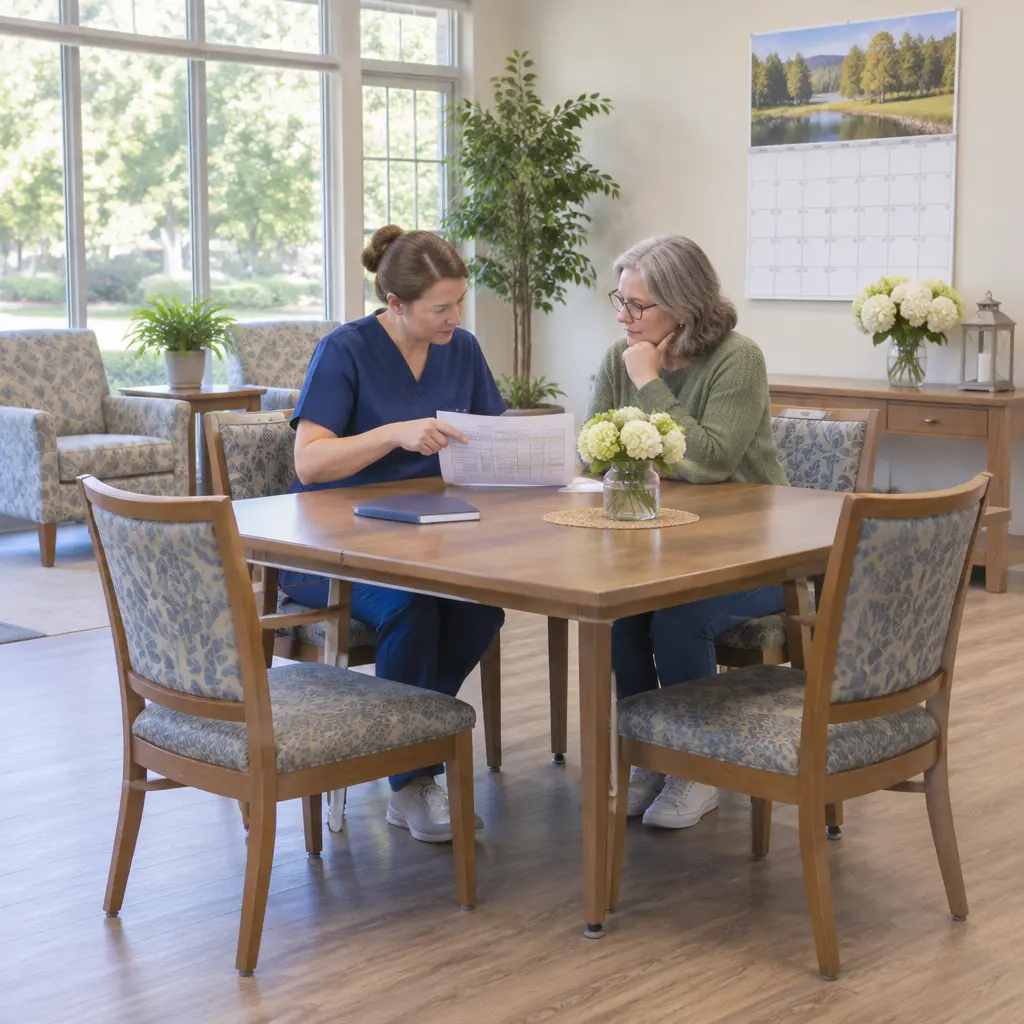
Skilled nursing integration for wound care is the coordinated planning of clinical treatment, daily routines, and communication among residents, nursing staff, clinicians, and families. It works best when a facility’s wound-care plan is clinically specific yet practical to follow at home or during visits. The Agency for Healthcare Research and Quality (AHRQ) reports that pressure injuries affect an estimated 2.5 million people in U.S. acute-care settings each year, underscoring the value of prevention and continuity across care settings. This article explains how integrated protocols are defined, how they can be aligned with family routines, and how documentation, education, and measurement help sustain safe care.
Defining Skilled Nursing Integration for Wound Care Protocols
Skilled nursing integration means coordinating assessment, treatment, prevention, and follow-up so each person involved understands the current plan and their role. The National Pressure Injury Advisory Panel (NPIAP) describes pressure injuries as localized damage to the skin and underlying tissue, usually over a bony prominence or related to a medical device. In a skilled nursing facility, an integrated protocol translates that clinical concern into consistent actions: assess the wound, identify contributing risks, carry out prescribed treatment, support nutrition and mobility, and communicate changes promptly.
Integration is not a substitute for clinician judgment or an authorization for family members to perform skilled procedures. Rather, it connects professional care with the resident’s preferences and everyday context. Relevant protocol categories include pressure-injury prevention, chronic wound management, post-surgical wound care, infection monitoring, and discharge planning. The Centers for Medicare & Medicaid Services (CMS) requires nursing facilities to provide care consistent with each resident’s assessed needs and person-centered care plan.
Assessment and individualized care planning
Assessment is the structured review of a wound and the factors that can affect healing. Clinicians commonly document location, dimensions, tissue appearance, drainage, surrounding skin, pain, and changes over time, while also considering circulation, sensation, mobility, continence, nutrition, and relevant diagnoses. A validated risk tool may support pressure-injury prevention, but it does not replace clinical assessment. The care plan should specify treatment orders, dressing frequency, offloading or repositioning measures, who performs each task, and when a change must be reported.
Prevention, treatment, and escalation
Prevention protocols reduce avoidable pressure, friction, moisture, and other risks; treatment protocols address an existing wound under an authorized clinician’s direction. The NPIAP’s prevention guidance emphasizes individualized risk assessment, skin inspection, repositioning, pressure redistribution, nutrition, and moisture management. An escalation protocol should tell staff and families how to report warning signs—such as rapidly increasing redness, warmth, swelling, new or worsening pain, unusual drainage, fever, or a sudden change in the resident’s condition. Suspected infection or deterioration requires prompt professional evaluation rather than an informal change to the dressing plan.
Coordinating Protocols With Family Daily Routines
Routine coordination is the process of fitting clinically required care around a resident’s normal activities without compromising safety or prescribed treatment. Families can contribute valuable knowledge about sleep, meals, bathing preferences, mobility habits, religious observances, and communication needs. That information can help the care team choose feasible times for dressing changes, skin checks, repositioning, and visits, subject to clinical orders and facility policy.
Building a practical daily schedule
A daily schedule identifies care tasks, timing, responsible staff, and any family-supported activities. For example, if a dressing change is ordered once daily, the team may coordinate it with a preferred time while preserving the prescribed interval and maintaining clean technique. A schedule should also make clear whether bathing, therapy, meals, or transport could affect the dressing, and who should be contacted if a task cannot be completed as planned.
A simple written schedule can reduce missed or duplicated tasks. It should be reviewed when the wound changes, the treatment order is updated, or the resident’s routine shifts. Family members should not remove, replace, or apply products to a wound unless the care team has specifically instructed and authorized them to do so.
Respecting resident preferences and family capacity
Person-centered coordination adapts communication and scheduling to the resident’s preferences while recognizing that relatives may have limits on time, distance, language, or caregiving responsibilities. Staff can ask which routines matter most, offer translated or accessible instructions, and agree on a realistic method for updates. Family participation should be voluntary and should not shift the facility’s responsibility for providing ordered nursing care.
Preparing for transitions between facility and home
Transition planning connects the skilled nursing plan to the next care setting. Before discharge, the resident and designated caregivers need understandable instructions covering the current wound status, supplies, treatment steps permitted for them, follow-up appointments, warning signs, and whom to call. CMS discharge-planning requirements emphasize planning around the patient’s goals and needs, including the services and support required after leaving the facility. The receiving clinician should get the relevant treatment orders and wound documentation through appropriate channels.
Communication, Documentation, and Quality Measurement
Reliable integration depends on a shared, current record rather than memory or informal messages. Documentation makes it possible to track the wound’s course, confirm that ordered care was provided, and identify when the plan needs clinical review. Communication should be timely, privacy-conscious, and directed to the appropriate staff member or clinician.
Consistent records and handoffs
A useful record includes dated wound observations, treatment performed, the resident’s response, relevant symptoms, and notification or follow-up actions. At shift changes or transfers, a concise handoff should identify the current order, next due care, precautions, and unresolved concerns. Families can be given an agreed update channel, but clinical decisions and order changes remain with qualified practitioners.
Auditing outcomes and improving the protocol
Quality measurement tests whether a protocol is both followed and effective. Facilities may review pressure-injury incidence, wound deterioration, completion of assessments, timeliness of escalation, treatment interruptions, and resident or family understanding. These measures should be interpreted in context: wound healing varies with wound cause, circulation, comorbidities, nutrition, and other clinical factors. A review of a missed dressing or delayed escalation should focus on identifying system barriers—such as unclear ownership, unavailable supplies, or poor handoff—and correcting them.
Practical Example: Coordinating a Dressing Plan With a Family Routine
Consider a resident whose prescribed dressing change is scheduled daily and whose daughter visits in the late afternoon. The nurse confirms the order and wound status, then coordinates the visit so the daughter can receive an update after care is completed. Staff document the assessment and dressing, while the daughter shares observations about the resident’s usual sleep and meal routine. If the resident develops new pain or the wound’s appearance changes, staff follow the escalation plan and contact the clinician; the family does not independently alter the treatment. This example illustrates how routine information can improve coordination without transferring clinical responsibility.
Conclusion
Skilled nursing integration connects individualized assessment, prevention and treatment protocols, family-informed routines, clear documentation, and transition planning. Its purpose is to make care more consistent and understandable while protecting resident preferences and preserving professional accountability. Facilities can strengthen coordination by using current written orders, assigning clear responsibilities, explaining warning signs, and regularly reviewing outcomes with residents and families. Residents and caregivers should ask the care team for an up-to-date wound plan, a named contact for concerns, and instructions for the next care transition.
Sources: Agency for Healthcare Research and Quality, Preventing Pressure Ulcers in Hospitals: A Toolkit for Improving Quality of Care, https://www.ahrq.gov/patient-safety/settings/hospital/resource/pressureulcer/tool/index.html; National Pressure Injury Advisory Panel, Prevention and Treatment of Pressure Ulcers/Injuries: Clinical Practice Guideline, https://npiap.com/page/Guidelines; Centers for Medicare & Medicaid Services, State Operations Manual, Appendix PP—Guidance to Surveyors for Long Term Care Facilities, https://www.cms.gov/medicare/health-safety-standards/guidance-for-laws-regulations/nursing-homes; Centers for Medicare & Medicaid Services, Discharge Planning, https://www.cms.gov/medicare/health-safety-standards/quality-safety-oversight-general-information/discharge-planning